




Monday, October 13, 2008
Redefining Travel Ball

We were scouring the message boards and on NorCal Preps, a poster named RTB1, also well known as Rob Bruno of NorCal baseball, mentioned that the term "travel ball" does not describe what real developmental programs are all about. We couldn't agree more.
Every time that we write the words travel ball, we think about how hollow these words really are. Just because a team travels, doesn't mean that they are producing results for their players. We just posted an article on what to look for in a travel team and if someone really wants to differentiate the good teams from the bad ones that just seek out meaningless tournaments to earn that $5 piece of plastic, maybe the terminology needs to change.
In an e-mail exchange with Rob we had mentioned that we like the term "prep development"...but being more specific...College Development Program is dead on in our opinion.
In soccer, the U.S. Olympic Committee has ODP or Olympic Development Program. In Baseball, it could be called CDP or College Development Program. The key word is program. You can't have results if you don't have a plan or program in place. It really separates a good program that is focused on college placement of its athletes, from a team of rag tag players going to the generic sports complex to win a worthless trophy.
There's nothing wrong with those travel teams in general. We applaud more kids playing baseball. But, the buyer must be aware of their purpose up front. Teams that travel for the purpose of winning can continue to call themselves travel teams. They even can say that they are a step above rec ball. But, if they don't have a plan to develop and have a good idea of talent and a great rapport with college recruiters, then they are travel teams period...nothing more.
The rest of the programs that have a track record of placement, development and a business plan to get a player to the next level, are the true College Development Programs...They are the CDP's that we will now refer to in the future.
Therefore, we now have a three tier system...
1. Rec Ball
These are teams that offer players the chance to play baseball, but not with a specific goal in mind. Many rec ball teams play their 25 games in a season and are very democratic about the division of talent. In some parts of the country, especially in the cold weather states, rec ball is embraced and there are some players that will get recruited by cold weather colleges out of these leagues. In warm weather states, players have the ability to play year round and rec ball doesn't provide enough competition or year round play for serious players.
2. Travel Ball
These teams provide more year round opportunities and the ability to play against better competition, but don't usually have the resources to offer much beyond that. These are the teams that sometimes come under scrutiny when the arguments and criticism between rec ball and travel ball heat up on message boards. There has been an increase of travel teams as of late and some are started by overzealous dads that want to showcase their sons. To be fair, some of these teams do provide a better opportunity to play against good competition, and some dads really know the game and CAN develop players. We applaud those teams. But after these dads realize that their sons need more or reach their goals of next level baseball on their own, these teams usually disband. The rest of the players are left wondering what's next?
3. College Development Program (CDP)
CDP is the top of the baseball pyramid. These were the programs that we were referring to when we touted travel ball. Except going forward, we will NOT being calling them travel teams anymore. From this point forward, we will be referring to true developmental teams as CDP's. Later on this week, we will be honoring our Top 5 CDP's in the country. It will be our second annual ranking. The teams that we will be ranking are the definition of CDP. They have a plan to develop, a data base and rapport with college coaches and a long list of players that have been placed over many years of service. They are not as obsessed with winning a trophy as they are making sure that their players understand the game and are being showcased in front of the right recruiters. Obviously, when you get a group of top players together, their competitive spirit wants to win, and many of them do win a major tournament... but they do so in front of hundreds of scouts at a Five Tool Mattingly or Perfect Game WWBA event.
God given talent, does it really exist?
For my whole professional career, I have heard one reason for why I possess the talent I have, that I was born with it. That God, from birth, blessed me with some innate talent of baseball. This sounds great, and even makes for an epic creation story. One in which, I was some how formed and molded specifically to pitch. This definitely feeds right into every player’s pride as well. That God made us so good at something that others marvel at the greatness we possess. Is this true? Do I have God given talent, which made me better then most people at baseball? Was I born, like an old Greek mythology tale, with a lighting bolt for an arm?
Despite all my sinful nature wanting to say yes, due to pride, the answer is simple, No. I was not born with a 94 mph fastball or a devastating curve ball that made hitters shake. I was simply born human. Just like everyone else. Maybe with some slightly different genetics, but for the most part, I am just like everyone else. I am not even what scouts want to see when they think of a pitcher. They want tall, long, and projectable bodies, just as if you could make a molded pitcher from heaven. I can hear a lot of you asking, “Well, if people aren’t born with God given talent, how do you explain the great talents?” To me that’s easy. Love.
There is one thing God does do for everyone, creates us in the image of Himself. Now that can mean a bunch of different things, but one attribute of that to me, is being creative. He made us creators, in a limited way, but creators, nonetheless. We imagine and create things. Some people love to create objects, some like to create art; others like myself, like to create talent. When I first saw the game of baseball I knew I wanted to play. I had a love for it. That love for it translated into wanting to play it, and get better at it on a daily basis. When you love someone, you want to spend time with that person and get to know that individual, same thing goes for the thing you love to do. This is the beginning to anything great.
When I was little, I loved a few things in my life, God, my family, and baseball. Due to this fact, that is where I spent all my time. This is where God gets involved I believe in showing you your “talent.” He will use whatever you love, (which I believe He puts certain loves in your heart) to guide you to your talent, because if you love what you do, you will spend more time on it. This time spent, will lead to getting better and better at it through experience and hard work. This is what leads to becoming great at something, not just being born with automatic skill. You have to practice.
There is no shortcut to greatness. I think a lot of people want to say, “You were born with it,” because it makes them feel better that they can’t do it. The funny thing is though, they can do a lot of things I can’t. I don’t say, they were born to be accountants, or CEO’s. No, they worked hard to become those things. They trained, went to school, practiced by studying to learn and became those things. Just like I trained almost daily from a young age to become a professional baseball player. I believe God gave me a love for what I do, that’s the gift, not a lighting bolt of an arm from the heavens. However, God in His providence, if you ask, will guide you along.
I cannot sit here and say that I did it all on my own. That I achieved all the things I have in baseball, because I alone worked hard at it. No, I needed coaches, players, and trainers to teach me the game. Without their prior knowledge, and God putting them into my life, no matter how much I loved the game, I would never learn the right way to play, much less play at a high level. This is where God’s grace and providence comes into play. James 1:17 states, “Whatever is good and perfect comes down to us from God our Father, who created all the lights in the heavens.” He made everything that is good; He wants us to be good at what we do, along with enjoying them with Him. There is nothing wrong with choosing a profession you love and are working hard to be great at it. God knows we will struggle to learn, but that’s the point, in that struggle we know that we need help. Being great means you need to ask, ask God and others for help. Let them teach you, learn from them, and trust God to guide you in that journey. That’s the talent He truly gives.
He gives us a talent, the talent of love. Don’t let anyone tell you that you were born without the automatic talent so to achieve what’s in your heart isn’t possible. If God put a passion for a certain career in your heart, go for it, trust God to guide you. It is there for a reason. He may guide and change your journey, but continue to trust that He first gave you that love and He knows best where that love should go, and it always ends back in one place, God. God is love; He gives us the capability to love what we do, and others. So it makes sense that He will always guide us to the source of that love, Himself. So when you’re looking for, “God given talent,” remember its not that you’re born with it, but you are born with a love to work at it. God given talent is to love what you do and do it the best you can.
Coaches Corner: Billy Wagner
The Grittiest Coach in America
By Adam Revelette
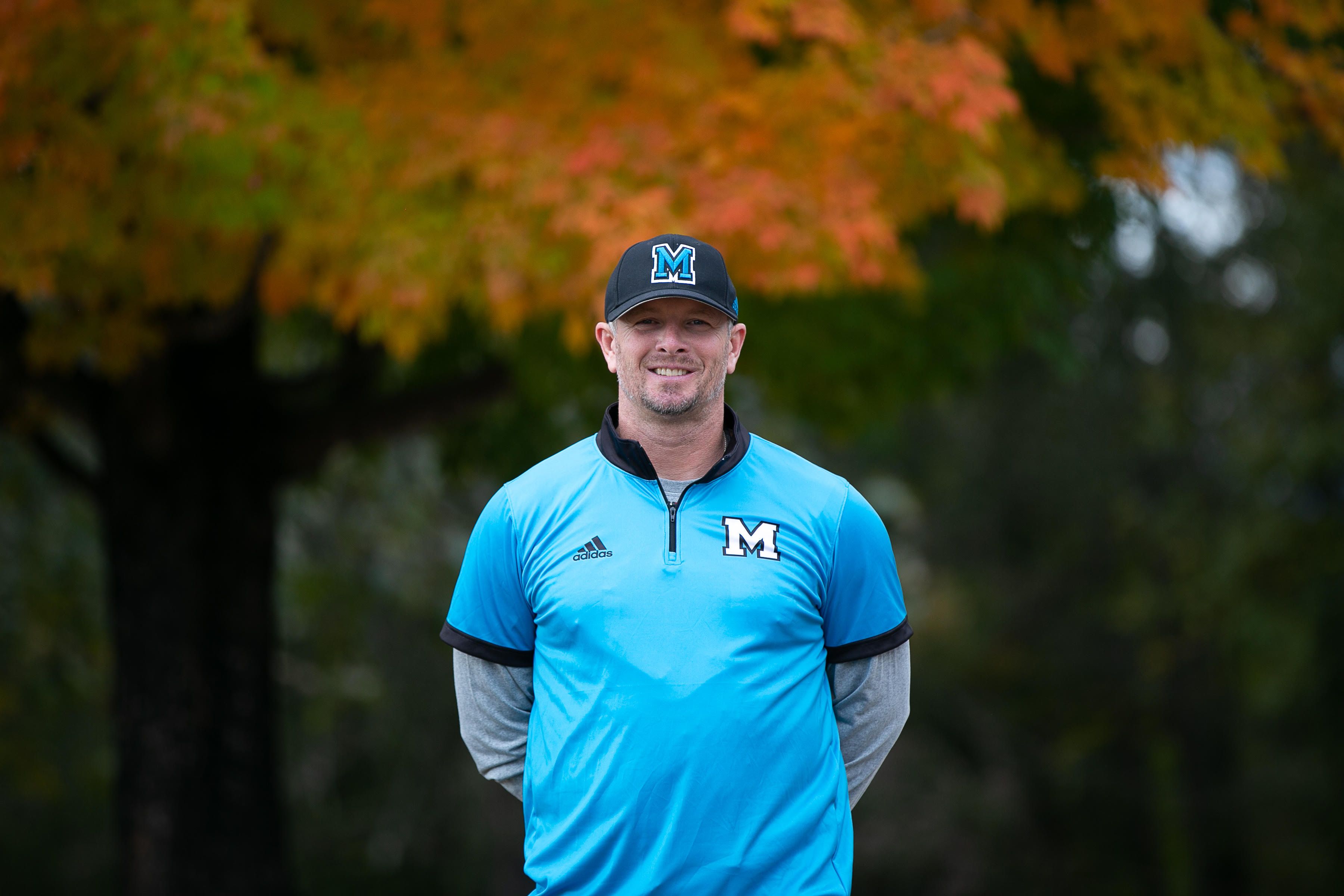 After a 17-year big league career, seven-time MLB All-Star Billy Wagner has stayed in baseball, currently serving as the head baseball coach at The Miller School in Abermale, Virginia. Inside Pitch caught up with ‘Billy the Kid’ recently to talk Hall of Fame votes, dealing with parents, the ‘grit’ factor in baseball and much more…
Inside Pitch: What’s it like getting votes for the Hall of Fame?
Billy Wagner: It's hard to put into words. To be honest, it’s a rollercoaster. Of course you’re excited, but then you get frustrated because you hear about every negative thing you’ve ever said or done when they’re debating stuff in the media. So I’ve stopped paying as much attention, but it is exciting. I mean, what kid wouldn't want to be known as one of the greatest? And for me to just be on the ballot and get votes, for somebody to say, "Hey, I think you're worthy," it's a tremendous honor.
IP: Was there a moment in your MLB career when you truly realized you had “made it?”
BW: When I was playing early in my career with the Astros, we were in the playoffs in Atlanta. I was usually the first one in the dugout before a game, so I come out and lo and behold, there's Reggie Jackson, and he's holding the bat and he's sitting down, and I don't expect him to know me from Adam, but I go, "Mr. Jackson, what an honor!" I became a five-year old fan again. And he says, "Mr. Wagner, I just want to let you know, I'm a big fan. I'd just like to face you one time. Just one time."
I was like, "man, that guy wants to face me?!" He says, "you may strike me out nine out of ten times, but I could get you one time." And I don’t know about all that, but that’s the grit and that fight that I love, that’s what Reggie Jackson has too.
As Jimy Williams and some of the coaches I've had would describe, you’ve got to enjoy that 3-2 count. It's not comfortable, it's not easy, it's a fight. And when you go out there and when you put yourself in that, just remember that everybody's feeling the same pressure you are. So it becomes enjoyable to know that win or lose, I get to fight. I choose to fight instead of giving up just because I’m in a tough spot.
There's a lot of those things that players just have to go through before they understand. And they may not even understand at your place, they may be out of high school, or out of college before they get it.
IP: What are your observations when it comes to handling the current generation of high school baseball players?
BW: Kids are bigger, faster, stronger, because they had access to so much more, but they will always be challenged mentally when it comes to having the capacity to understand failure and what it takes to be consistent.
Being on the team has become just as good as playing on a team. The whole atmosphere of team and playing and winning gets distorted. Sure, everybody wants to play, but it’s about teaching a kid how to be a teammate, how to put in the work each day with it. You can go out and make yourself feel real good hitting off the tee, but if you never put yourself in that mental state of competition or a win-lose situation, then you're not gaining anything.
Playing without consequence ruins the game. That's where participation awards and things like that have distorted our ability to play for a real purpose. I know it’s not all about winning, especially at the high school level, but you’d better understand what consequences are. If I go out there and I go 0-for-19, I haven't earned the right to play. I haven't made the adjustment. But kids at a lot of places get to keep playing because they have already paid to play. That’s a tough one for me as a competitor. I’ve called travel ball a ‘necessary evil,’ but it's much harder to have a talk to mom and dad about, "Hey, little Johnny's not getting it done right now, so he’s going to sit the bench.” Hopefully you get lucky every now and then and your parents support that decision.
IP: How do you handle parents as a coach who has ‘been there, done that?’
BW: I just tell our parents and our kids that I love loyalty, but I want kids who are producing. It’s not all about winning but I’m not going out there to lose, that’s for sure. Sometimes, in the process of becoming successful, you get your feelings hurt.
IP: Are there moments where you just want to scream, “Don't you know who I am? I know what I'm talking about!”
BW: No, no. You know what? I didn't, because I had an awesome coach growing up in high school and his name was Lou Peery, at Tazewell High School in Virginia. He recently passed away, in October of 2019. We’d have conversations when I decided to get into this, when I decided I was going to be all in. He just told me that you can’t ever take anything personal, especially when it’s a parent talking about their child. That kid is the greatest thing they’ve ever seen and sometimes you’re going to look like you’re trying to defeat that notion. He just encouraged me to be realistic, guide parents and players instead of forcing things on them. So yeah, I let parents get in my face and yell at me. A little.
It's hard as coach. But I've also learned that the way I see my own kids is the same way as everyone else. But I don't sit around and say, “Oh, you're right, you know, Johnny's really good, I’m so sorry.” I just let them do their thing. And then I talk to them. “This is why. I know it's hard.”
You can't expect them to understand, and it doesn't matter who you are. A lot of my friends that played pro ball, Andy Pettitte, Lance Berkman, they get the same thing. My players’ parents are like, “yeah, we know who you are, but that doesn't make you a great coach just because you've played and you did well.” What makes you a good or a great coach is how you communicate with the kids.
There are moments that you get frustrated with parents but you really have to sit back and think, would you say something different if it was your kid? So those are things that I've learned from the help of tons of other coaches around my area. Even if I got into the Hall of Fame, that would not change how I go about my business.
I'm working on the field. I'm not different from another guy who's actually working for a living. I cherish what I do and I do the best I can, but I don't go to meetings going, "Hey, you need to listen to me. I know everything." I'm really the guy that comes in and tries to sit there and listen and if there's something to share and I can help, then so be it. But to be honest with you, it's really me trying to learn how to be the best coach for each individual kid.
IP: What do you make of the current age of analytics and all of the data that comes with it?
BW: Honestly, I don't know. If you hang a breaking ball and it gets crushed, it was a bad pitch. If it's a fastball in the middle of the plate, the spin rate doesn’t matter. Launch angle? If a ball goes over the fence, then it was launched. If we’re camped underneath it, it wasn’t. How about the size of the field you’re playing on or the wind? It’s crazy to me, how good and bad has a different definition now, a number. Baseball has changed, but really, we’re using the same concepts and we’ve changed the vocabulary; we’ve made a new way to present it so players can see it another way, and that’s fine.
I just remember playing more, throwing more. I promise you I threw twice as much as these kids ever thought about throwing. 150 pitches on a Friday, come back and close the next two games and not even blink. And sure I had surgery, but not until I was 35!
Nowadays, kids are being pushed and it comes with so much pressure to get the DI-itis like there's meaning and substance to who they are. It is tough. Back when I was playing, I was thinking “holy cow, I can get into college?”
I'm not very good with analytics at all. Karl Kuhn at Radford will rattle off numbers to me and I have no idea what he’s talking about, but we’re saying the same thing – you can’t throw pitches up there, they’ll get hit. Or, you can pitch up there, they aren’t getting hit.
IP: You had a relatively healthy 17-year big league career. Is there an aspect of your upbringing to which you can attribute that?
BW: I just wanted to play. I didn't just want to be good, I wanted to play the best. I broke my arm twice when I was little. I've had stitches everywhere. I cracked my skull. I fell out of trees. I've done all these dumb things, so being hurt wasn't a new thing to me. When I got hurt in 2000, I had my flexor tendon repaired and I just went back out and starting playing catch like normal, and everybody was like, “You can't do that.” When I had Tommy John surgery, I’ve got Jerry Manuel telling me, "Hey, you had a great career." And I looked at him like, "what are you talking about? I'm not done. You're not going to tell me that.”
I felt like I had such a long injury history, I knew how to work through it, how to have grit and how to overcome. I think that is a huge advantage for people. How many stiches have you had? How many broken bones? I broke my collarbone twice playing football, but I still tell our kids to play football. Honestly, playing multiple sports is awesome. That requires some grit – rugby, football, basketball, tennis – all kinds of sports can have their unique challenges. But having grit and learning what pain and injury and hurt and fear are…that’s huge. Your best players need to understand that, how to decide what they really want to be, and that nothing is going to hold them back. Today's kids, they don't have that as much. They specialize way too early. And they probably don’t fall out of as many trees.
IP: Do you bring up mechanics very often?
BW: I think every pitcher has their own unique timing and delivery – that’s why baseball is so awesome. But there are also similarities. We talk about there being a balance point, a load, a drive and a landing with every delivery. Find a happy medium between that timing and the mechanics and don’t reinvent the wheel. That kid’s been throwing stuff forever, it’s in there. You just want to clean off some of the clay and mold a little bit.
When we talk about mechanics, we talk about consistency and our movements. I don't talk about, "all right, did you feel the disconnect from your front hip to your shoulder?" I don't. I can't talk like that. And so we've talked about the guy that deals with our pitchers when I'm the head coach, he can talk like that. The biggest thing is creating a kid that can compete in the zone first. Throw strikes anytime you want to.
IP: What do you think about the controversies that Major League Baseball has faced recently: corked bats, steroids, cameras and buzzers, and the like?
BW: Somebody is always trying to find the upper hand. I mean the White Sox had a camera, everyone knew that. I remember playing against Chris Sabo in 1996, he took a swing and the bat exploded and bouncy balls went everywhere. And he just kind of laughed and walked off, took his suspension, and that was that.
I’ll tell you what, I could take care of that buzzer thing pretty quick with a little ‘fly-by,’ which I was known to do occasionally. I promise you a buzzer wouldn’t help you then. Maybe you do know what I’m going to throw, but you don’t know where I’m going to throw it. Roger Clemens used to throw one up there to Jeff Bagwell every spring training. He’d knock him on his butt, and Jeff would get up, and it would be over. I think they played basketball together in the offseason.
But I still love the game. I think the game is awesome. I think the kids are great and I think we as coaches continue to praise our kids and push them and let life teach them a lot of things through baseball.
IP: You’ve mentioned that having ‘grit’ is something that really helped you with your career. Is there any way you can identify or develop that as a coach? Where did you develop your grit?
BW: I wanted to be involved with all the older kids so much that I was going to do whatever it took to play. When you're the smallest and you break your arm, then there are all these things said that you can't do. You find a way. You find a little grit about how you're going to overcome some of the things that are against you.
I think that was just how I'm wired. I think the Lord blessed me with the opportunity and just gave me all the talents that I have. I think that's what led me into playing and to do something that I think is probably the most gratifying thing I've ever done in my life. And that's coaching.
WOLFORTH THROWING MENTORSHIP: ARTICLE 58

Where Does Your Pitcher Rank?
Velocity Perspective: What Matters, What Doesn’t, and What to Watch Out For
If you’d been away on a space mission for the past 50 years and just landed back on Earth, you might be stunned by how much more weight is given to velocity in today’s competitive baseball landscape compared to the 1970s.
Truth is, velocity has always been coveted. But with the rise of radar guns in every dugout and technologies like Trackman® giving instant feedback on pitch data, velocity has evolved from being just one desirable quality into a central metric that often defines a pitcher’s value, future opportunity, and status…sometimes even more than it should.
It’s not hard to see how we got here. In a playoff game between the Yankees and Rays in 2020, the average fastball velocity of that game hit a record 97.1 mph. Imagine that!. As someone who grew up idolizing guys like Bob Gibson, Sandy Koufax, and Nolan Ryan, I can tell you… even I had a hard time wrapping my head around that number.
And I don’t see the trend slowing down anytime soon.
With the obsession around velocity continuing to intensify, it’s no surprise that myths, misinformation, and anxiety have crept in, especially among parents wondering how their Johnny stacks up when it comes to mound time, college recruiting, or draft buzz. Velocity is often, fairly or not, right in the middle of those conversations.
So, as someone who’s spent over 30 years training pitchers…with 141 draft picks and hundreds of scholarship athletes coming through our doors…allow me to offer some perspective. Consider this a grounding reminder, especially if you’re starting to feel overwhelmed or uncertain.
Lesson #1: The 8–14 Age Range Is a Fragile Window
Let’s get something straight from the beginning. At the Texas Baseball Ranch®, we absolutely support developing a powerful, healthy arm at any age. But chasing radar gun numbers or obsessing over them during ages 8 to 14? That’s a very dangerous game.
It’s tempting, I get it. But here’s why we strongly caution against it…
• No one earns a college scholarship or gets drafted at 10–14 years old. Yes, a few freshmen or sophomores might get early verbal offers. But make no mistake, those offers aren’t binding. Whether or not they hold up depends on how that athlete performs during the spring and summer of their junior year. Unfortunately, every year we meet seniors who thought their recruiting process was behind them, only to find out it's just beginning. Those are tough conversations, and my heart breaks for those families.
• Physical development is wildly inconsistent. I’ve seen 12-year-olds throwing in the upper 70s who plateau at 82 by age 17… and others who topped out at 58 mph as preteens only to eventually hit 90+ and pitch in the big leagues. No one has ever asked me how good I was at 12, and that’s because everyone instinctively knows that performance at that age isn’t directly predictive of success later on.
• Soft tissue is still developing. That means pushing for max-effort throws at high volumes can be a fast track to injury. We see it all the time, young athletes racing up the wrong mountain, only to discover the summit doesn’t offer what they hoped. Some stress is necessary for adaptation, yes, but the dosage, frequency, and duration must be carefully managed. It’s not about avoiding effort, it’s about applying it with precision and patience.
In the frenzy to chase velocity, we often overlook four other vital components of development, areas that usually deserve more attention, especially in young throwers.
1. Pain and discomfort should always come first. If a pitcher is in pain, chronic or acute, our top priority must be eliminating it. Gains don’t stick when the arm isn’t healthy. Velocity should never come before durability.
2. Recovery is a red flag. Big swings in velocity or inconsistent performance often point to a recovery problem. If recovery is poor, everything else will eventually break down.
3. Command keeps pitchers in the game. Velocity might get you noticed, but command keeps you pitching. Throwing hard doesn’t mean much if you can’t throw strikes or if you’re constantly behind in the count.
4. Stuff, spin, and deception are essential to long-term advancement. Plenty of guys have hit 95+ on the gun but never advanced because they didn’t miss enough bats. Getting swings and misses…neutralizing the barrel…is what separates pitchers who flash from those who last.
Lesson #2: Where You Live Matters (Even If It Shouldn’t)
It might sound strange, but 85 mph doesn’t mean the same thing in every part of the country.
A 17-year-old in Kimball, Nebraska who throws 85 may be seen as an absolute stud… while the same velocity in Houston, Miami, or Southern California might barely raise an eyebrow. We all tend to gauge ourselves relative to those around us. And that can either inflate or deflate our true perception of ability.
So parents, keep perspective. Don’t get too high or too low based on where your son stacks up regionally.Look broader, zoom out, and remember, this is a long game. One game, one tournament, one radar reading doesn’t define anything.
So How Hard Is “Hard Enough”?
Here’s how we currently assess velocity benchmarks by age at the Ranch. These aren’t absolutes, but they give you a helpful sense of where your athlete stands and where the real constraints may lie.
12 Years Old:
<55 mph: Significantly behind
56–60 mph: Slightly behind
61–64 mph: On track
65–69 mph: Slightly ahead
70 mph: Significantly ahead
13 Years Old:
<60 mph: Significantly behind
61–65 mph: Slightly behind
66–71 mph: On track
72–75 mph: Slightly ahead
76 mph: Significantly ahead
14 Years Old:
<68 mph: Significantly behind
69–73 mph: Slightly behind
74–79 mph: On track
80–83 mph: Slightly ahead
84 mph: Significantly ahead
15 Years Old:
<72 mph: Significantly behind
73–78 mph: Slightly behind
79–82 mph: On track
83–86 mph: Slightly ahead
87 mph: Significantly ahead
16 Years Old:
<75 mph: Significantly behind
76–80 mph: Slightly behind
81–85 mph: On track
86–89 mph: Slightly ahead
90 mph: Significantly ahead
17 Years Old:
<80 mph: Significantly behind
81–83 mph: Slightly behind
84–87 mph: On track
88–91 mph: Slightly ahead
92 mph: Significantly ahead
18 Years Old:
<82 mph: Significantly behind
83–85 mph: Slightly behind
86–89 mph: On track
90–92 mph: Slightly ahead
93 mph: Significantly ahead
19–22 Years Old:
<84 mph: Significantly behind
85–87 mph: Slightly behind
88–92 mph: On track
93–95 mph: Slightly ahead
96 mph: Significantly ahead
What It All Means
Velocity matters. It opens doors. It creates opportunities. But it’s just one piece of a much bigger puzzle.When pursued recklessly, especially too early, it can do far more harm than good.
Our goal isn’t to stir fear or discourage ambition. We’re here to bring clarity, context, and a long-term approach that prioritizes each athlete’s health and development. Let the radar gun inform your progress, not define your identity. And if your numbers are ahead of the curve, great but don’t let that success pull your attention away from the other skills that truly drive advancement at the next level.
Personally, I believe a smart and sustainable goal for any aspiring college or professional pitcher is to reach and stay in the slightly ahead category…while also developing a durable, healthy arm, commanding the baseball at a high level, building elite secondary pitches, and recovering well between outings.
In my 30+ years of experience, chasing the significantly ahead category at all costs has led to far more pain, injury, frustration, and disappointment than it has to lasting success. Yes, velocity can help but successful pitching at the higher levels is about so much more than a number on a radar gun.
But what if you're currently behind for your age group, either slightly or significantly? First, welcome to the club. Far more pitchers are behind in velocity than ahead. You’re not alone.
Second, where you start is never where you have to finish. As of this writing, we’ve had over 650 athletes at the Texas Baseball Ranch® touch 90 mph.
Now, without question, some of those players were going to hit that milestone with or without us. But many of them reached it because of the structure, support, and mentorship they received here. The point is, progress is possible…real, measurable, meaningful progress, even if you’re starting from behind.
No matter where you currently stand, you are not fixed. You’re not stuck. You can improve your standing. You just need a system that meets you where you are and guides you with precision through the next steps in your pitching journey.
And always remember…yes, the radar gun is easy to see, but the real work... and the real rewards... live in everything that number doesn't show.
The topic of velocity sits just below politics and religion in terms of how much heat and emotion it stirs up. But our goal at the Ranch is always the same: to help you sort fact from fiction and make the most informed, thoughtful decisions possible.
Until next time…
Stay curious and keep reaching for the stars,
Coach Ron Wolforth
Coach Ron Wolforth is the founder of The Texas Baseball Ranch® and has authored six books on pitching, including the Amazon Best Seller Pitching with Confidence. Since 2003, The Texas Baseball Ranch® has had141 of their players drafted, and 651 have broken the 90 mph barrier. Coach Wolforth has consulted with 13 MLB teams, numerous NCAA programs, and is often referred to as “America’s Go-To Guy on Pitching.”
Coach Wolforth lives in Montgomery, TX with his wife, Jill. They are intimately familiar with youth select, travel baseball and PG events as their son Garrett (now a professional player) went through the process. Garrett a former catcher in the Cincinnati Reds and Houston Astros organization still holds the PG Underclass All-American Games record for catcher velocity at 89 mph which he set in 2014 at the age of 16.